
Utility Safety Powered by Trust
Quality PPE and lineman safety equipment to help protect the people who power the world
3M Personal Protective Equipment (PPE) for Utilities and Energy
Power keeps our world moving. Workers in utilities and energy industries are vital to the daily operations of our communities, governments and businesses. 3M is here to help protect them on the job—all while meeting the demands of your business operations. From fall protection to respiratory protection, protective eyewear, communications and more, our wide range of quality PPE for utility protection is designed to help you enhance site health and safety. And it’s all backed by knowledgeable support and over 50 years of innovation in the science of safety.
Learn how 3M can help your industry:
Wind Energy
-
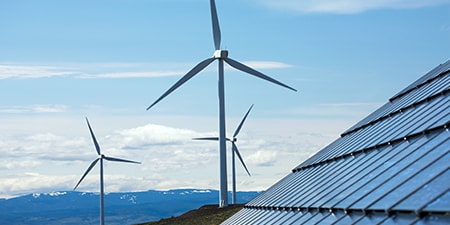
At 3M, we understand that the Wind Energy industry is a diversified work environment. Not only is it constantly changing as the work progresses and technology evolves, but the industry itself is always innovating with new procedures and materials that present new challenges for your fall protection plan.
Wind energy employees work in multiple scenarios where safety is always foremost on the job. These environments are specialised and multi-disciplined, demanding a full range of fall protection solutions to meet the needs of a variety of workplaces. That is why employers turn to 3M Fall Protection’s leading brands DBI-SALA® & Protecta® for industry expertise, superior quality products and continual systems innovation.
Protection throughout the whole process
-
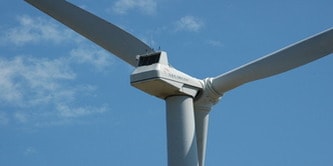 Wind Turbine Construction
During wind turbine construction, workers face unique height safety challenges, from climbing tower ladders and installing nacelle components to running cables through the full length of the tower.
This requires the use of full-body harnesses with lanyards, designed to be comfortable, lightweight, and durable for all-day wear, while offering multiple anchor points and tool-carrying options. In these high-risk environments, additional accessories such as trauma relief straps can further enhance safety and comfort in the event of a fall.
-
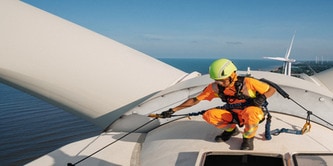 Wind Turbine Maintenance
Wind turbine maintenance requires safe access to towers, nacelles, and blades, whether through ladders, service lifts, or specialist rope access systems. Workers spend long hours in fall arrest equipment, so harnesses must be lightweight, durable, and comfortable, with multiple anchor points and tool-carrying options.
Accessories such as trauma relief straps improve safety in the event of a fall, while reliable self-rescue and evacuation systems are essential since conventional ground-based rescues are often not possible at turbine heights.
-
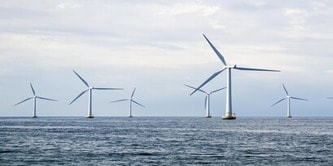 Wind Turbine Offshore Maintenance
Offshore wind turbine maintenance presents all the same height safety challenges as onshore work, with the added demand of extreme environmental conditions.
Fall protection equipment must be built to withstand saltwater exposure, requiring sealed self-retracting lifelines to prevent corrosion and harnesses that can be easily maintained through frequent washing. Just like onshore, workers rely on comfortable, durable harnesses with multiple anchor points and rescue systems designed for areas where conventional ground-based rescue is not possible.
-
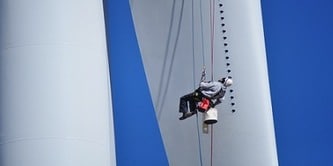 Wind Turbine Evacuation
Evacuation from a wind turbine requires fast, reliable solutions, as conventional ground-based rescue is often impossible at height. In the event of fire, mechanical failure, or other emergencies, self-rescue and casualty evacuation systems must enable rapid descent for single or multiple users from any point in the tower, including the nacelle.
Equipment should be lightweight, quick to deploy in confined spaces, and simple to operate, ensuring personnel can act swiftly and safely when every second counts.
-
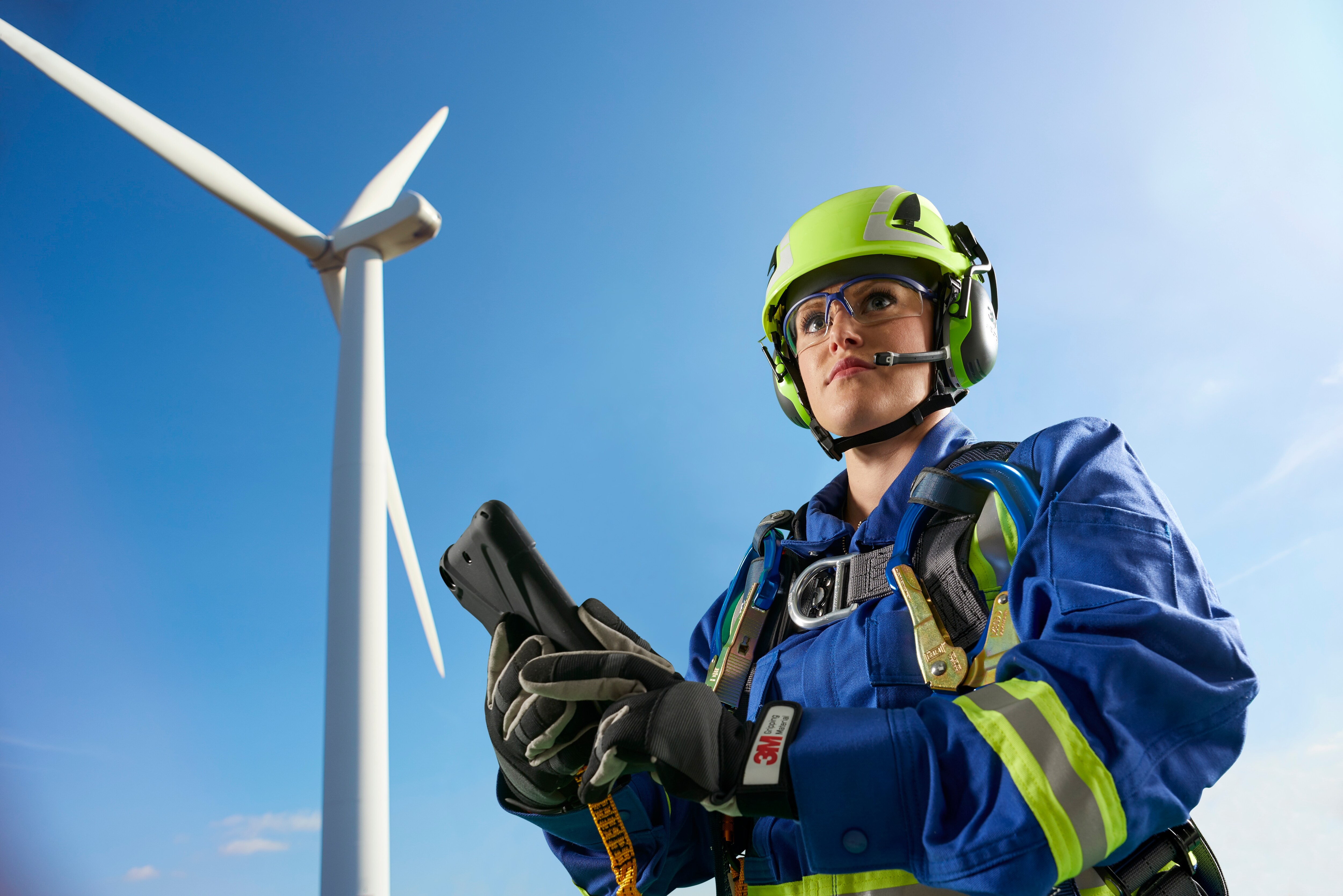
Who is Global Wind Organization (GWO)?
Global Wind Organization is a non-profit industry association founded and owned by its members who are drawn from globally leading renewable energy manufacturers, owners and operators.
GWO published the first version of the Basic Safety Training (BST) standard in 2012 in response to the demand for a recognizable standard in the wind turbine industry. This was followed by the Basic Technical Training (BTT) Standard in 2014.
GWO has since launched a range of other training standards which address the most common safety and technical training needs of renewable energy's largest employers.
-
What are GWO training standards and why does the wind industry need them?
GWO training standards describe the requirements for training courses that are recommended by members of GWO. By complying with GWO standards and requirements, certified training providers are considered competent and proficient. 3M has some training centers globally that are GWO certified training providers.
Any training participant with a current training record in GWO's WINDA database is considered competent and knowledgeable according to the learning objectives of that standard. GWO members accept the training record as confirmation the participant has achieved the learning objectives as described in the standard. Benefits of attending GWO training standards:
- Improved safety standards
- Standardization
- Improved workforce productivity
- Competitive costs
- Supply chain alignment and contract certainty
Source: GWO webpage
GWO Certified Training Courses
Participants who have passed each training below only has certificate validation of 2 years, after which they must attend refresher training bi-annually.
-
Working at Height & Rescue and Refresher
The GWO Work at Height and Rescue module is designed to provide wind industry personnel with the basic skills that will enable them to work safely at height and respond effectively to emergencies.
-
Advanced Rescue Training (ART) and Refresher
These courses deal with the specific issues surrounding advanced rescues in all areas of a wind turbines.
-
Sea Survival & Refresher
This course gives the participants the ability to act safely and responsibly and to take the correct preventive actions in all aspects of offshore operations from shore to installation vessel (or WTG) and vice versa.
-
Basic Safety Training – 4 Modules and Refresher
This is a 4-module course covering Working at Height & Rescue, First Aid, Fire Awareness and Manual Handling.
-
First Aid and Refresher
The aim of this course is to provide individuals with the basic first aid skills, knowledge and practical guidance that will enable them to work in a safe manner in the wind industry.
-
Manual Handling and Refresher
The aim of this course is to provide individuals with the basic manual handling skills, knowledge and practical guidance that will enable them to work in a safe manner in the wind industry.
-
Fire Awareness and Refresher
To provide personnel with the basic skills that will enable them to work in a safe manner in the wind industry and to meet emergency response training requirements.
-
Crane & Hoist Basic User and Refresher
Training in accordance with this Crane and Hoist Training Standard will enable wind industry personal to safely operate, inspect and maintain common types of fixed, small cranes and hoists in the wind industry by following manufactures manuals, documentation, and relevant legislation.
-
Slinger Signaller and Refresher
Upon completion of the GWO Slinger Signaller Standard (SLS), participants will be aware of the risks and hazards encountered when working with slinger signalling within the wind industry. Furthermore, they will be able to control and mitigate those risks and hazards.
-
Basic Technical Training
The aim of this Basic Technical Training prepares participants for further company specific training by providing them with the necessary training to perform basic hydraulic, mechanical, electrical and bolt tightening tasks.
Working at Heights
-
Products designed for the specific needs of many industries with at-height hazards, we can help find the combination of fall protection solutions to meet the requirements of many application, such as lineman safety equipment, across utilities and energy industries.
Our 3M™ DBI-SALA® and 3M™ Protecta® Fall Protection protects are trusted around the world to help at-height workers do their jobs safely. As an industry leader in fall protection, 3M offers a full portfolio of solutions including:
- Anchors
- Body support and harnesses
- Connectors
- Descent and rescue
- Fall protection for tools
Training, News and Events
-
 Online Webinars - Worker Health & Safety
Need it now? No matter how busy your schedule, 3M can help you increase your knowledge of PPE energy, utility protection and related workplace health and safety topics. New webinars are added regularly for live or on-demand viewing

Expert professionals in working at heights and confined space
180089020491 (Globe Telecom and Bayan)
+63-22711680 (for other networks and overseas calls) Customer Service : 180013200201 (PLDT and Smart) and
180089020491 (Globe Telecom and Bayan)
+63-22711680 (for other networks and overseas calls) Email customer support at: 3mphsafety@mmm.com
